Maggie Gyllenhaal follows up her sublime directorial debut, The Lost Daughter, with a wildly original, huge swing of a film. Whilst it is exciting to see such a daring film supported by a big studio, unfortunately the film suffers from too many incoherent ideas that leave it in a mess.
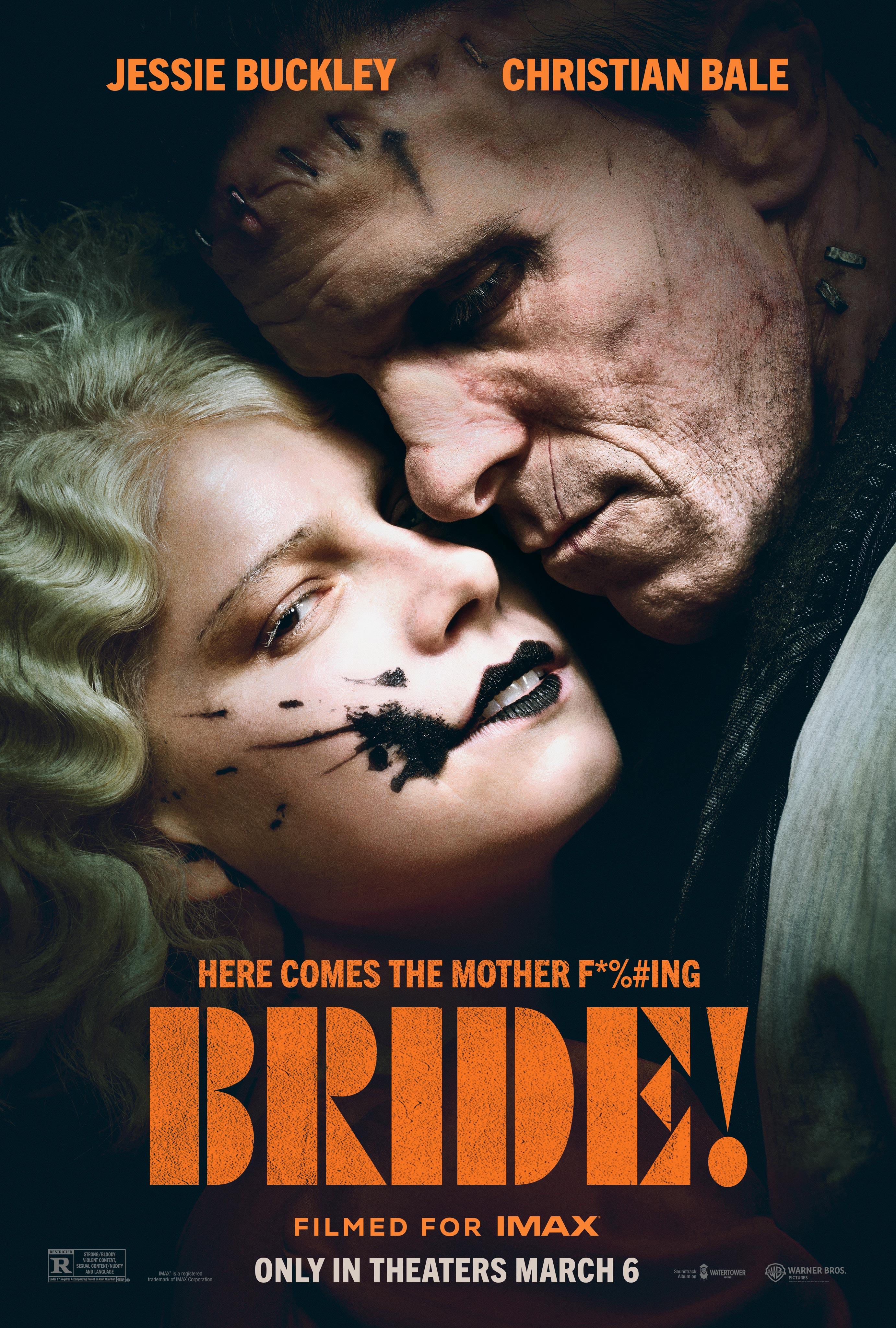
Set in Chicago in the 1930s, we meet Ida (Jessie Buckley), as she becomes suddenly possessed by the spirit of the late Mary Shelley (also Buckley) who has some unfinished business in the form of another story she wants to tell. Shortly after this initial possession, Ida falls down a flight of stairs and is killed. We later meet Frankenstein’s monster (Christian Bale), who, here, calls himself Victor Frankenstein (let the arguments begin). He is lonely and isolated and pleads with another famous reanimation scientist, Dr. Cornelia Euphronius (Annette Bening) to make him a companion. It is Ida’s body that is subsumed and upon waking with no memory, she is convinced by Victor that she is his bride. The pair attempt to go out into society but when Ida is attacked, Victor kills the men responsible and the pair go on the run. In pursuit are Detective Jake Wiles (Peter Sarsgaard) and his assistant, but really superior detective, Myra Malloy (Penelope Cruz), who track the reanimated couple as their crime spree continues across the country.
Gyllenhaal can be commended for her multitude of ideas and her drive to take action to remedy the lack of lines or agency for one of the most iconic characters in horror (the bride herself). However, a lack of refinement or steady execution means that the final film feels more like a first draft where ideas are blurted onto the page without interrogation, editing or sense-checking. Somehow in this world Mary Shelley exists as the author of the fictitious Frankenstein, yet Frankenstein and his creature are real. The film tries to be both a zany road movie and straight detective drama, whilst often jumping into tangents or plots that feel unearned and under-developed (such as The Bride somehow starting off a feminist revolution as a result of one uneven scene). Characters, too, are introduced and then given nowhere to go. There are a lot of threads here, rarely stitched effectively together, moreso feeling like the jumble you’d find at the bottom of a sewing bag. It seems like the film has things to say but not an intelligent way to say them, instead tacking on random subplots in a hit-you-over-the-head obvious way to make a point. Gylenhaal’s last film was so nuanced and beautifully observed, but that emotional depth is hard to find here.
The strange idea and tonal clashes bleed into the performances, particularly Buckley’s which is beyond strange but that feels the fault of the film more than her. The inhabitancy of Shelley’s ghost in her character creates snap moments of blurting out bizarre 18th century words or sentences, before snapping back into the crazed Bonnie and Clyde of it all. Bale puts in a very sympathetic performance as Frankenstein and is one of the better parts of the film (it’s also just great to see him back on our screens). Other characters are given little to work with and don’t stick in the mind.
For all of the admirable political views the film clumsily tries to get across, it leaves more emotionally interesting moral dilemmas by the wayside. The ethical question of Frankenstein’s subsuming of Ida’s body, reanimating it then lying about their relationship feels as though it had the potential to build to a more satisfying emotional climax, but this too feels muddled. It is yet another casualty of the film being overstuffed, leaving nothing explored but everything mentioned.
The filmmaking is handsome; the lighting is gorgeous (a film immune to the plague of modern washouts), the costume and makeup is really interesting and well thought-out. It looks like a film from 20 or 30 years ago (I mean that as a big compliment). It also has moments where you can see what it could have been. Some sequences work and there are moments the film starts to get a hold on you before veering wildly off-piste in a way that throws you out of it. Those glimmers, the iconography of The Bride’s appearance and the slapdash of outrageous and bizarre concepts might lead this to gain some kind of cult following down the line, more for people to revel in the camp of it all than for its emotional impact upon a smaller audience.
Whilst it is fantastic to see a somewhat-auteur director being trusted and given the opportunity to take big swings, it sadly doesn’t work here. In a time when it often feels like we can hear the death knell for originality in big screen filmmaking, it is nice to know it is still possible, although the end result here likely won’t help the argument. The Bride! is a lot, but at least that means it earns its exclamation mark.


