Exploring thorny issues through a dialled-up plot, Jonatan Etzler’s English-language debut is an unsettling black comedy that intrigues and entertains but sometimes struggles to strike the right balance between comedy and horror, leaving the two elements fighting for space.
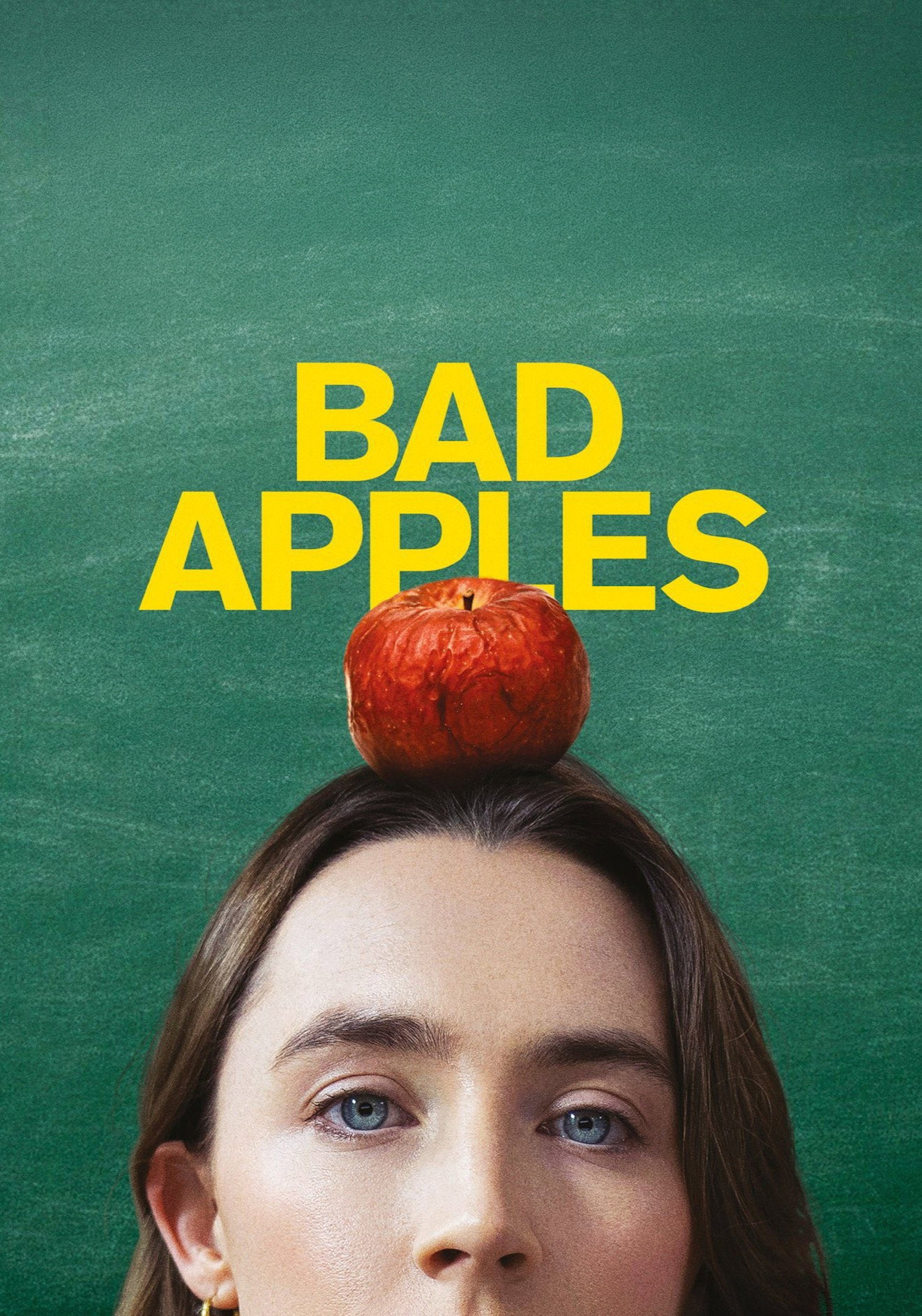
The film centres on Maria (Saoirse Ronan), a primary school teacher, struggling to be the teacher she wants to be primarily due to one overly disruptive and violent child, Danny (Eddie Waller). Warned about keeping him under control after a trip to a cider factory (apple imagery abounds throughout – unsubtle but effective), things escalate when the next day Danny pushes the aspiring teacher’s pet, Pauline (Nia Brown), down the stairs and is suspended. With a spontaneous Ofsted inspection announced for the following day and unable to get in contact with Danny’s father (Robert Emms), Maria visits their home and on leaving finds Danny vandalising cars. In an attempt to stop him, she accidentally knocks him unconscious. Panicking, she drives him to the hospital by which time he wakes up and threatens to tell everyone she attacked him. In a whirlwind of fear, she ends up taking him to her home and locking him in her basement. With Danny now missing, a police investigation gets underway, but those at school seem mainly nonplussed by his absence. Maria’s class is now peaceful and thriving, but in continuing her charade, Maria tries to find ways to justify her actions to herself and pushes down an increasingly perilous path to keep her secret safe.
This wild and grippingly unpredictable tale dives headfirst into its premise and traps its audience in the predicament of its protagonist. Invariably stressful and claustrophobic, Etzler keeps the camera close to Ronan, her ever-expressive eyes allowing her panic and inner conflict bleed through into every scene. An unsettling tone pervades the film as Chris Roe’s nerve-jangling and propulsive score gets under your skin, creating an uneasy momentum and ratcheting up the tension as the characters’ actions become increasingly unhinged. The audience is in this with Maria; despite her disastrous, illegal and unethical actions, one of the film’s biggest triumphs is keeping you on her side. Empathy is earned in the early stages as we see what Maria is dealing with and how it affects her, and later, she doesn’t disappear into some monstrous kidnapper, but treats Danny with a kindness he has been missing. She furnishes his basement and, after school, teaches him one-on-one, getting to the bottom of some of the issues that may have caused his earlier behaviour and giving him a level of attention he appears to have been deprived of. The pair’s dynamic remains unstable but we are given greater insight into Danny’s character and for all the insanity of the situation, Maria genuinely cares for him.
This exploration of what drives our behaviour, what the root of good or bad actions are and an ultimate question of the greatest good belies the satire of the film. There are moments of genuine emotion and poignancy in amongst the film’s arsenal of heightened satirical weaponry. The absurd nature of its plot is grounded in generally well-developed characters, brought to life through some pitch-perfect performances. Ronan carries the film, ensuring Maria is imbued with a depth of emotions that allows audiences to remain engaged and empathetic. A master of subtle expression, she is captivating to watch and really invites the audience inside Maria’s mind. She is supported by two brilliant child performances. As Danny, Waller delivers a well-judged performance that makes both the more violent and vulnerable moments believable. His comic delivery is also pretty note perfect. As Pauline, Brown is deliciously irritable, cranking up the precociousness to almost villainous levels. Jacob Anderson rounds out Maria’s personal life as the ex-boyfriend/coworker, bringing a level-headed adult into the mix, and Emms represents the more serious consequences of Maria’s actions as Danny’s despondent father.
The severity of the situation and the lightness of the comedy don’t always mix and the film struggles to find its place tone-wise at times. It can veer from genuine horror to comedy too drastically, causing the reality of the situation to clash with the intended comedic overtone. You can recognise scenes that are supposed to be played for laughs, but the comedy struggles to overpower the genuine horror and emotion of the situation. This is a film that will make you squirm just as much – if not more – than it will make you laugh, but these two elements aren’t always brought together successfully. This prevents the film’s climax from fully working as the film hasn’t leant into the absurdity enough by that point for it to not feel too outlandish (although the build up to it is hilarious, largely down to the musical stylings of one Pauline). It leads to an ending that isn’t entirely satisfying and that jars in comparison to the unpredictable twists and turns that have led to it.
An engaging and entertaining ride, if a little uneven, Bad Apples may not entirely stick the landing but offers an excitingly distinctive journey and another fantastic performance from Ronan that you’ll struggle to peel your eyes away from.


