Last night, the most prestigious awards in the British film industry were handed out in a show full of speeches characterised by Time’s Up, unsurprising winners, and a sweep of awards for Three Billboards Outside Ebbing, Missouri.
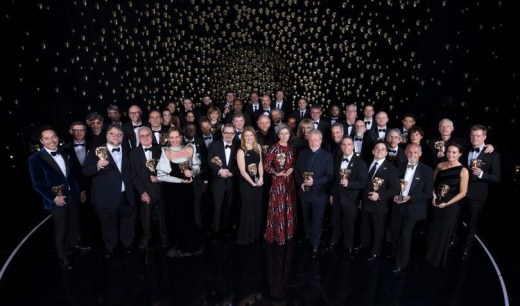
The biggest winner of the night, Three Billboards began by claiming the Best British Film award, and went on to prove the accuracy of locks for Supporting Actor (in Sam Rockwell) and Leading Actress (for Frances McDormand), as well as the awards it was the big favourite for: Original Screenplay (Martin McDonagh) and Best Film. It also broke the perceived ‘curse’ that if you win Best British Film, you won’t win Best Film overall.
Most of the rest of the winners also went as expected. The four acting winners seem to be on an unstoppable course for Oscar gold; anything else would be a complete upset. It also continued the Director-Film split that has occurred at almost all of the other ceremonies, with Guillermo del Toro claiming Director for The Shape of Water, and Three Billboards getting Best Film. However, the lack of even a directing nomination at the Oscars could mean we won’t see this trend continue, as favour may tip towards the so far perceived ‘2nd place’ winner of The Shape of Water. It was nice to see Blade Runner 2049 and Baby Driver get some recognition, and a little surprising Dunkirk didn’t pick up more gongs. There was overall a pretty good spread of awards to numerous films, outside of the Three Billboards sweep.
The show itself began with a well-done skit of host Joanna Lumley on the phone to various characters from this year’s films (who knew how many phone scenes were in the big nominees). Lumley proved herself a fine host, delivering witty and charming jokes and gags (the application of lipstick using a BAFTA as a mirror felt very Ab Fab), and keeping a light, and distinctly British, feel to the evening. She was occasionally a little slow to get back to the podium following certain speeches leading to some breaks in the shows rhythm, but who knows, maybe they’ve edited that out in previous years.
The show itself began with a beautiful performance by Cirque du Soleil, inspired by The Shape of Water. It was a mesmerizing piece, an impressive interpretation of the film that obviously tied into the ceremony well. A couple of performers showed up again later in a gag, although it seemed a little bizarre and out of place then.
In terms of the speeches, as usual there were the ones which were an endless list of names, but more seemed to grab their opportunity at the mic to speak from the heart or for issues they believe in. In his acceptance speech for Rising Star, Daniel Kaluuya seemed very surprised and extremely gracious, beginning his speech by thanking everyone who voted for any of the nominees in his category. He seemed genuinely humbled and gave heartfelt thank yous (including to his mum) that didn’t feel as though he was reeling off a well-rehearsed list. It was also filled with London slang, which seems appropriate for the BAFTAs yet is rarely heard. Rockwell was another who gave a heartfelt speech of thanks, and one that was especially touching as he dedicated his award to the late Alan Rickman. Upon receiving his fellowship award (shockingly his first BAFTA), Ridley Scott was given the longest time to speak, and gave a nice speech about how he has risen through the industry. The showreel presented prior to his speech really highlighted just how many iconic and beloved films he has under his belt – certainly a well-deserved fellowship.
A lot of the speeches, and other elements of the ceremony, focused on Time’s Up, and the movement for equality and the eradication of sexual harassment/assault. It was all touched on rather eloquently, and cemented the notion that this is a game-changing moment, and everyone is getting involved. In her speech, McDormand even went further as to talk about civil protests, and the way the idea of the three billboards in her film has been taken and used as a mark of protest for causes in reality (thinking especially about the three regarding justice for Grenfell that were around London recently). The atmosphere was present on the red carpet too, with many choosing to highlight the issues in their interviews, some attendees bringing activists as guests, and the prevalence of black dresses. This, as well as the speeches being used as a platform for worthy causes, made the night more political in a sense, but really confirmed a sense of solidarity and change.
As usual, the presenting was a mixed bag; some were cringey, some robotic – always surprising when coming from actors – and some were funny and charismatic. The stand out has to be Salma Hayek’s introduction for the Best Actor award, noting how in a historical year for women, she was on stage to celebrate men. She didn’t stop there though, going further to announce Frances McDormand as the winner, before proclaiming Gary Oldman (also astonishing this is his first BAFTA), as the real recipient. This was perhaps partly a joke in relation to the Time’s Up movement and all that is surrounding it, but also a little jab at the infamous Oscar Best Picture mess up from last year. This was also referenced in a gag from Lumley regarding an envelope that had been left lying around.
All in all, it was a night with little surprises regarding the recipients of the awards, but after last year, who knows how some of that bodes for the Oscars (especially in the Best Picture category). The night passed without much incident, however, it was a night that proved the continuing prevalence of the discussions surrounding equality, and showed this isn’t just a phase that is going to pass.


