One of the most highly anticipated films of the year, from one of the most innovative and beloved directors around, taking on a vital piece of history; the expectations were sky high. There was so much pressure on this film to blow us away that if it didn’t even quite reach those hefty heights, it would have been billed a disappointment. It is the absolute opposite.
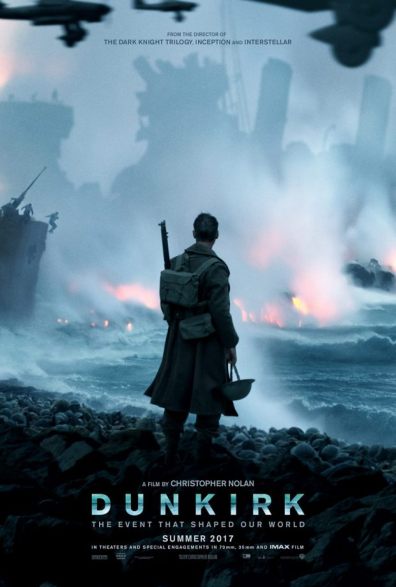 In the May of 1940, British and allied troops had been forced out to the beaches of Dunkirk, with their line slowly receding and the enemy perimeter closing in around them, the men were trapped, all 400,000 of them. Just 26 miles away was home, but there was no way to get there. The beaches were attacked, but so were any big ships and vessels that managed to dock and receive soldiers. Torpedos targeted from the water, and by Messerschmitts bombed from overhead, with an apparent limit in RAF aircraft due to resources being held back for what would become the Battle of Britain. Thus, Operation Dynamo was set in motion; not only naval vessels were sent out in the evacuation mission, but every possible civilian boat (with their civilian crew) were sent out into war in what is one of the most incredible rescue missions in history. It is amongst this triumph of a disaster that Christopher Nolan sets his tale, crafting one of the most emotionally exhausting film experiences ever to be shown on screen.
Of course, as this is Nolan, this is no ordinary war film, nor is it told in a conventional manner. Nolan’s tale is elementally split in three, following groups at the mole (jetty on the beach), the sea, and the air. Of course, the narrative split does not stop there; Nolan’s love of playing with time enters the picture as the stories at the mole, sea and air last for differing lengths of time (one week, one day and one hour, respectively), and their intercutting makes for an extraordinarily effective and clever way to piece the narrative together and layer the story as if it were a puzzle. The different time periods break up any chronology, and mean that we often know the fates of various vessels or soldiers before we are privy to how or when or even who is involved. This creates a much more complex and engaging viewing out of what is essentially a bare-bones survival story.
The choice to follow certain groups of individuals brings the film into a much more intimate place. Whilst some may say this takes away from the epic nature of the numbers involved, the extraordinary images on the beaches fill in for that, and the intimacy strengthens the film’s experience, as it allows it to be much more effective and personal. There have also been a few criticisms that the characters don’t have quite as much depth as perhaps they should. However, this is a fast-paced story of survival which means you do not have to know much personally about the characters to empathise and become invested in them. They also all reveal a lot about themselves through what they do and how they act in the situations, meaning that conventional dramatics are unnecessary and, would they have existed, would weigh down the pace and realism of the story. When you’re fighting for your life, you’re hardly likely to have a nice quiet moment to pour your heart out or shove in unnecessary exposition in amongst the bombardment from enemy fire and the elements.
It is a horrifically close film. It truly manages to transplants you into the situation and immerse you in the horror. It goes beyond empathy-evoking; you fully feel like you are there and in danger with the characters. It manages to create an exhausting intensity and sustain it throughout the entire film, never losing pace or lulling at all. It manages to convey all of the horrors with very little blood and gore (it is a 12A), a testament to the feat of the filmmaking here as it doesn’t need naturally repulsive visuals to labour the point. It is a fantastic telling of a survival story, that keeps you hooked even though, despite not knowing individual characters’ fates, you do know the outcome of the evacuation as a whole.
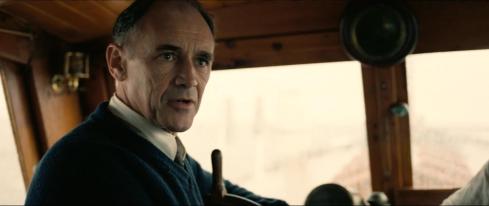 The cast is very strong across the board, without a weak link. It is also without what may be a ‘stand-out’, in part due to the high level each performer is at, but also due to the weighting of experiences and sense of camaraderie that is fostered throughout the film. This is not a story of an individual’s courageous achievement, but of the men all working together purely to survive. The newcomers hold their own against veteran actors (and previous Nolan collaborators – with Tom Hardy once again proving he can hold his own amongst the actors even when most of his face is obscured), and yes, Harry Styles can certainly act. It may be a little distracting initially when he appears as the only recognizable face amongst his group, and with the audience likely predisposed to (at least initially) pay a little more attention to his acting out of curiosity, but fear not, he gives an impressive performance. Now maybe the media will focus on something else with regards to this film?
There isn’t quite one protagonist in particular, this really is an ensemble piece, but Fionn Whitehead’s (an excellent new actor) Tommy is perhaps the closest to one we get. He is the first person the audience is introduced to, and perhaps is a little more of our way into the film. With the first part (and a fair bit of the film) relatively low on dialogue, we attach ourselves even more to the characters as it is through their expressions and actions that we are pulled into what is going on. As a little bonus, for film fans, Nolan’s ‘lucky charm’ actor also features (although not in the flesh) in the audio equivalent of a blink-and-you’ll-miss-it cameo (early on in the film), something easy not to spot if you are immersed in the story.
Nolan has reteamed with Hoyte van Hoytema (who seems to have taken over from Wally Pfister as Nolan’s cinematographer, as of Interstellar) and once again, they supply gorgeously stunning and incredibly impactful imagery (certain shots seem destined to become classic and iconic in the future). Partly down to this too, the difference between the portrayal of the beaches and home is palpable, even beyond the obvious. The film is also a phenomenal technical achievement both with what they managed to do with IMAX cameras, including strapping them to spitfires (I am yet to see the film in IMAX, but it sounds spectacular), as well as the kind of old-school filmmaking used throughout each department. The use of thousands of extras and incredible in-camera stunts (including spitfire-messerschmitt dogfights) resulting in a lack of CGI serves to add to the realism and authenticity captured throughout the film; something that is especially important in order to pay tribute and do justice to a real-life event properly.
Another frequent collaborator, Hans Zimmer, also provides great power in the story through his (as always) incredible score. At times encompassing the ticking of a clock to great effect to ramp up the tension even further and further press the urgency of the situation, it is also one of the key components of the triumphant and extremely emotion scenes, whether it is capturing sacrifices or the great ‘Dunkirk spirit’, the great swells will certainly move you, along with the rest of the film, to the verge of tears.
This stands up there with the greatest war and survival films, but also separates itself with its unique and brilliantly clever narrative style to provide something so immersive and engaging, it is bound to hold up on multiple repeat viewings, and even become a classic of the genre. This is a great war film, but certainly still a great Nolan film that celebrates the triumph and hope that came out of a military disaster, and is a great tribute to all involved. It will likely strike a particularly strong chord with Brits, but is really about humanity and the power of the human spirit in amongst horror and chaos, something universally empowering.
And, although it isn’t necessarily that important, this could be the film that finally gets Nolan the awards love he has proved himself deserving of.
UPDATE: I have now seen it in IMAX and would completely recommend going if you can. It ramps up the tension and immersion even more than you would have thought possible, and the visuals are absolutely spectacular. With most of the film being shot on actual IMAX cameras, and the rest on 70mm it is an awe-inspiring experience, taking it to yet another level.


Pingback: A Guide To: Christopher Nolan | REEL WREN
Pingback: Is it worth it? The Cinema | REEL WREN
Pingback: Going in Cold | REEL WREN
Pingback: DVDs of the Year: The Christmas List | REEL WREN
Pingback: Beyond 2017 | REEL WREN
Pingback: My Top 10 Films of 2017 | REEL WREN
Pingback: Oscar Nominations 2018: Initial Thoughts | REEL WREN
Pingback: BAFTAs 2018 | REEL WREN
Pingback: Oscars 2018: Predictions and Opinions | REEL WREN
Pingback: ‘The Odyssey’ and IMAX 70mm | REEL WREN