The BAFTAs once again proved themselves to be definitively their own entity, that, whilst a core part of the overall awards season and seen by many in some ways as an indicator for the Oscars, are still willing to go their own way when it comes to some big awards.
The biggest surprise of the night was Robert Aramayo taking the Best Actor gong for I Swear, an award that seemed to already have Timothée Chalamet’s name engraved on it at most ceremonies so far this year. Aramayo was not even really in the conversation for a nomination at a lot of the international (especially American) ceremonies so to see him take it home at the BAFTAs was a big shock, and the expressions on his and his family’s faces were a real treat. His performance in I Swear is excellent, completely involving and believable, both technically and emotionally, and hopefully this win will encourage more people to see what is both a well-made and important film. His speech also offered one of the most touching moments of the night as he spoke about fellow nominee Ethan Hawke delivering a talk when he was a student, a recollection and moment of recognition that clearly touched Hawke himself and highlighted the community of filmmaking and dialogue between artists. The win won’t affect the Oscar race at all but it is an exciting win and one that reaffirms BAFTA as a body with its own identity and tastes, away from the Hollywood-centric. It’s also always great to see someone outside of the big studio push win; we do love an underdog.
Wunmi Mosaku also offered a lesser surprise in her win for Best Supporting Actress. The award has been spread across different actresses at the biggest ceremonies so far but it felt like the momentum was really in Teyana Taylor’s favour. It was great to see Mosaku take the gong for her beautiful and sensitive performance in Sinners, and it has thrown a bit more excitement into the Oscars race as awards season rolls on (there’s still three weeks to go). Taylor still feels like she’s at the forefront of the conversation but this category is shaping up to be one of the more exciting races of the year.
Sean Penn’s win in Best Supporting Actor was also a surprise. He had been an early favourite back when the film was released but had quickly lost steam as competitors premiered and began to build steam. It felt at this point that the momentum had turned towards Stellan Skarsgård and it felt like he was getting a lot of love in the room but ultimately lost out. It remains to be seen if Penn can ride this and One Battle’s hype to a third Oscar but it feels unlikely at this point. He and Skarsgård deliver wildly different performances (such is the dilemma of awards season in trying to compare apples and oranges) but it feels like the goodwill is still with Skarsgård (Penn’s absence at the BAFTA ceremony won’t have helped him) and the desire to see the veteran actor up on the Oscar’s stage won’t have faded so whilst it is a shame he remains BAFTA-less, this definitely isn’t the end of the road.
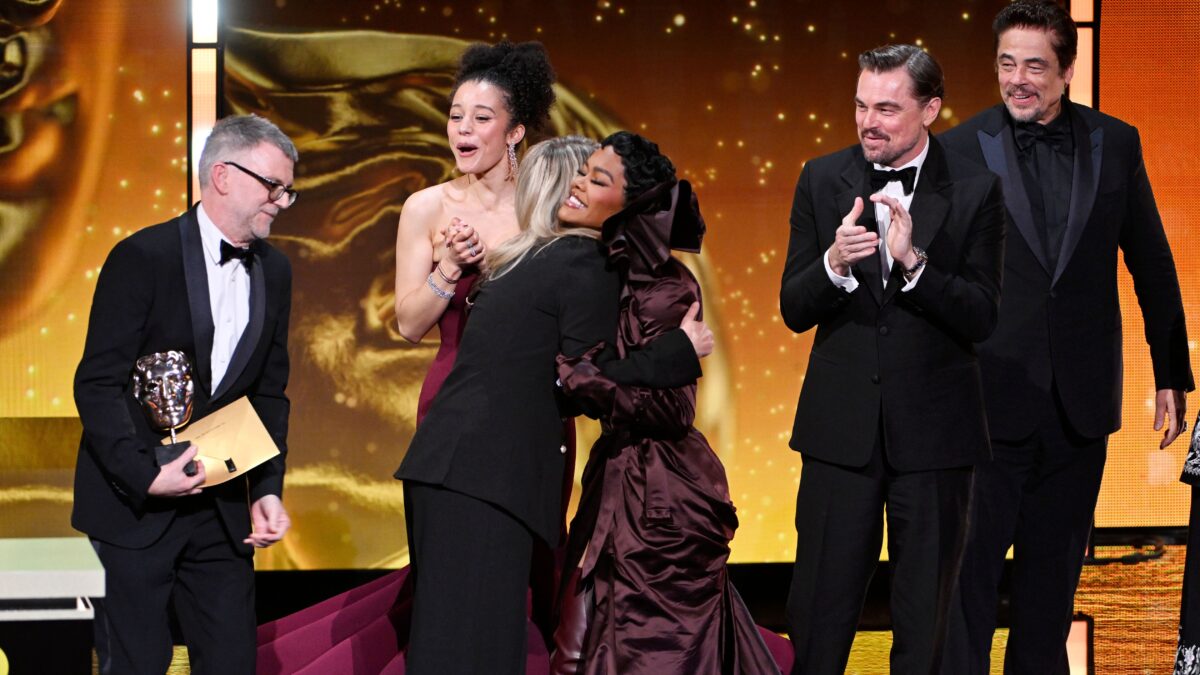
The majority of the rest of the awards went as expected, with One Battle After Another steamrolling through three of the big five and taking home six awards overall. Most of the speeches were tinged with a poignant melancholy as the team highlighted the loss of Adam Somner, a highly regarded AD and one of the producers of the film who sadly died before the film’s release. The film seems unstoppable at this point and doesn’t seem to be suffering from frontrunner fatigue. As one of the year’s runner ups to PTAs behemoth, Hamnet received recognition as the best British film, and Jessie Buckley continued her much-deserved sweep in the Best Actress category. It was edged out in Original Screenplay, with Ryan Coogler picking up the award (and likely to continue to add to his trophy collection over the next few weeks); absolutely shamefully this is the first time a black person has won that BAFTA. Sinners, the first runner up of this year’s season, also took home Original Score, making history again as the most-decorated film by a black director in BAFTA’s history. Frankenstein took home a well-deserved three craft awards for its gorgeous world-building through sets, costume and makeup. Sentimental Value won Best International Film, no surprise due to the love it received in the other categories (the other nominees in that category have not been released where I live so I can’t comment on those yet). Avatar: Fire and Ash took special effects, but what else could? The Best Actor surprise meant that Marty Supreme went home empty-handed. It feels like a film whose legacy won’t be impacted by its lack of wins across the season due to its strong fanbase and positive reception
BAFTA’s unique awards of Rising Star, which also went to Robert Aramayo (the first time anyone has won both) and Outstanding Debut by a British Writer, Director or Producer, which went to brothers Akinola Davies Jr (director) and Wale Davies (writer) for My Father’s Shadow as always provided highpoints of the night and gave audiences new names to watch out for as they move forward in their careers.
As for the show itself, BAFTA continues to be a hard audience to impress but the ceremony’s writers don’t always feel like they are putting their best foot forward. The opening was once again cringe-worth and was received with a dearth of laughs, despite host Alan Cumming’s charismatic personality and strong showmanship. Even Paddington later on couldn’t get much love. Later quips by Cumming that were more irreverent and felt more off the cuff got a much better reception, suggesting BAFTA should lean more into a more relaxed and less obviously scripted presentation in future. Some of the funniest moments of the night developed more organically with poor Paul Mescal being picked on by Cumming, eventually getting called out for checking his phone but, luckily, he received it all in good nature and laughed along with everyone. A bit around British snacks went down quite well, especially with some of the more game A-Listers playing into the bit (we love you Emma Stone). As for the presenters, there were few cringe-comedy intros, with most choosing to just stick to a generic, professional script, and those who didn’t actually having the comic chops and charisma to pull off the bits they were trying to do.
Overall, it was a night that offered some exciting wins and cemented the status of the season’s frontrunners. British talent was platformed and BAFTA proved once again how its rule that voters must watching all nominated films can help voters see past the overarching awards season narratives and vote purely based on their own opinion.


