In the wake of the recent news about part two of the Divergent finale being relegated to TV, I thought I’d take a look at the risks and benefits of splitting a franchise’s (often based on a Young Adult book series) final chapter, seeing as, sadly, this acts as proof that the risk and the consequences are solid and possible.
I’m not that familiar with the Divergent series so cannot comment on the specifics of the situation, however, if it is in keeping with the trend that has emerged, I would assume that had the last film not been just ‘Part 1’ then they would have certainly completed the full story, and perhaps had a better finale (Allegiant stands with just 12% on Rotten Tomatoes). I’m going to look primarily at three other high profile examples of split finales instead, which together seem to encompass most of the advantages and disadvantages of this practice.
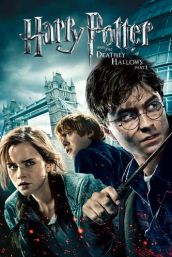 It seems that ever since Harry Potter and the Deathly Hallows, every other Young Adult franchise has felt the need to split their final book into two films with varying degrees of success. Both of the Deathly Hallows films were very well received (the second part more so in that it contained the film’s climax) and due to the detail in Rowling’s book and the unavoidable length of the adventure (you can’t really cut out a horcrux), the creation of two films was arguably warranted for more than just financial reasons. The films also worked in that they each functioned as a self-contained story with an arc, build-up and climax. Granted, Part 1 certainly has more build-up and a less explosive climax, but, all the same, it had a satisfying story trajectory, and thus could stand on its own two feet. There was a climactic rescue and emotional death scene at the end of Part 1 meaning that it didn’t feel like an abrupt cliffhanger. Neither of the films felt excessive in length either, or that anything had really been drawn out to fit two runtimes (despite the general consensus that Part 1 isn’t the most exciting film, it contains vital moments needed, and more than enough adventure to sustain). Therefore, for Harry Potter, the split worked, and worked in its favour, allowing a satisfying conclusion that felt proportionally epic, as well as films that could stand apart.
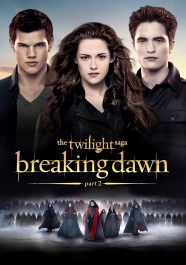 When other franchises, however, also decided to go for the split route, they ran into more difficulties. For example, the split of Breaking Dawn suffered from a lack of sufficient content to sustain two films, so much so they needed to invent things for the film (more on that later). Breaking Dawn is not a thin book, but neither is it jam-packed with plot; there is a lot of description. There is description of Bella’s feelings, and then of understanding her becoming a vampire, and so on. As a result, the film had a lack of content to draw on. The first film in particular is little more than a drawn-out honeymoon, and drawn-out pregnancy. Now, the Twilight films were never on par with the quality of the likes of Harry Potter anyway (it has never even reached 50% on Rotten Tomatoes across its films), but the split hurt it even more. For Part 2, unlike Harry Potter and many franchise finales, Breaking Dawn contains no final showdown, no epic battle – literally a conversation in a field before everyone agrees there’s no problem and goes home. With this being the climax of the franchise, and essentially being given its own film, the split forced the filmmakers to be more creative in order to create a remotely satisfying end-point. Honestly, what they did was very clever and certainly got a reaction out of the crowd. [SPOILER] In inserting a fight that was subsequently revealed to be a vision, it certainly got its audience to sit up and pay attention (and maybe shout and freak out at the screen). It was practically the cinematic equivalent of trolling, and a very clever mechanism to bring the film some excitement. Now, there’s no telling if they would have done this had the franchise not been split, but no doubt the entirety of Part 1 could have been condensed into 20 minutes, half an hour at a stretch. Combining them would have taken one pointless film out of the equation and therefore perhaps lifted the finale as a whole.
Finally, the split finale that exists between Breaking Dawn and Allegiant is, of course, The Hunger Games. For a book that felt that it was running out of steam anyway (I also had issues with how quickly the ending was resolved in the book), to split it into two over two-hour films was going to be a stretch. Where Mockingjay fell down was in a lack of arc in each film. Part 1 was all build-up, and Part 2 was all of the climactic action. This lead to neither film being particularly satisfying a no real narrative arc was set up in order for the films to function separately. Part 1 was not very exciting, laboring the point in order to fill time, without an ending much more than just a cliffhanger, and Part 2 contained all of the climactic action but with none of the build-up, reducing the dramatics of it. Neither film was particularly bad, but if the story had been told in one, it would likely have been a much better and more powerful ending.
Overall, there are many risks to splitting up your franchise’s ending, with Allegiant/Ascendant unfortunately suffering as a casualty. Almost always it feels that we could have been given one great film rather than two lesser ones, but hey, Hollywood is a business and chances are if they can try and double their money, they will.


