Seven years after the last instalment and 31 after the first, our favourite toys are back in action. This time, however, they are faced with a toy-wide existential threat: tech devices. Bringing most of the action back to the settings of kids’ bedrooms, the film returns more to its heartfelt roots, but despite its important message it feels slight, missing elements that stop it reaching the high bar of the first three chapters of the series.
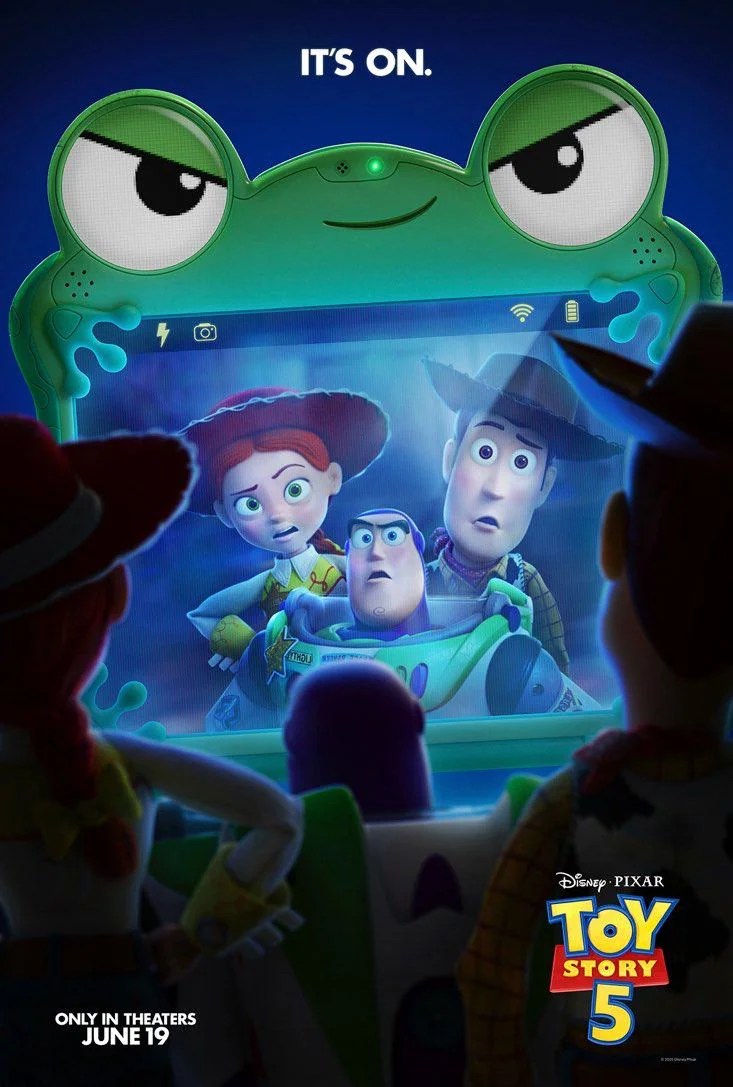
We are back at Bonnie’s home, with our main gang (sans Woody) and the Bonnie-loved additions of Toy Story 4 enjoying all kinds of crazy stories as Bonnie plays to her heart’s content. However, her loneliness and longing for friends soon becomes apparent and despite Jessie’s best efforts, she is struggling and ostracised for still playing with toys. In a last-resort attempt to help their daughter, Bonnie’s parents buy her a tablet device named Lilypad (Greta Lee). As soon as this is in Bonnie’s hands, she is glued to it, the toys and imaginative play discarded on the floor. The toys (now with Woody, on a temporary return from his mission in the abandoned toy movement) fight back against Lilypad, who believes she is the key to getting Bonnie friends, immediately adding her into a group chat where she is invited to a sleepover. Untrusting and desperate to help Bonnie, Jessie attempts to sneak along but ends up separated and taken back to somewhere from her past.
Toy Story 5 finds its core reason to exist as an attempt to fight back against tech’s offensive on the imagination and innocence of childhood, although a film that exists solely with the honourable mission of imparting a social message doesn’t always exist to serve character or story in the best way. The film paints a depressing picture of modern childhood where kids are glued to screens and toys and imagination discarded. As an adult, it is dark to watch, however, the film doesn’t falter in carrying the mantle for the power of and need for creativity and play. The focus shifts the franchise from being an elegiacal portrayal of the inevitability of growing up (as explored in earlier instalments) to a scream about the societal shift that is stealing those innocent years away at a younger age. For the most part, the film is fierce in its stance and it doesn’t pull punches, however, it softens a little by the end. This is likely in recognition of the reality that tech is here to stay but there is hope in moderating how it is used, but it feels a little unsatisfying.
The film finds its lead in Jessie, leaning into her backstory from 2 to give greater emotional weight to the main plot; she is forced to reckon with her abandonment issues as she feels a cycle somewhat repeating itself although in a more existential manner. There are even a few heart-wrenching notes of Toy Story 2’s When She Loved Me sprinkled in for maximum tears (the more you remember that sequence, the more this film will hit you). Where Jessie’s original story was centred on being discarded because her kid grew up, there is a greater emphasis here on the early erasure of childhood now due to screentime. She gets some beautiful emotional moments, played wonderfully by Joan Cusack and is the real heart of the film, but this storyline gets a little hijacked by some fun, but not emotionally resonant, new characters. Alongside Jessie, the only other character that earns emotional investment in the story is Bonnie; she is given a real presence in the film and there are some really heartbreaking moments in her life, more than we’ve seen before in the franchise. It shifts the focus to the humans more than Toy Story’s of old, with the stakes for this eight-year-old feeling painfully high, increasing our investment in the toys’ exploits.
By this fifth instalment, the ever-expanding cast of characters means that many get pushed to the side in the unfortunate way of many long-running franchises. The ensemble from the original barely get a look in for the most part, a similar fate befalls Bonnie’s toys from 4 and the abandoned toys from that film are really just cameos. The most egregious victim of this is Woody himself. It is an inspired and fun choice to make Jessie the lead, but the story focuses so much on her it forgets the rest of the gang. Woody barely features and has very little purpose plot-wise, and Buzz is also given fairly little to do (the minimal subplot involving both has little effect). The first three films thrived on the chemistry between the characters – they were a gang with different personalities and relationships that evolved throughout the story or served as points of friction. That is sorely missing here (and also removes some of the fun factor). The characters also seem to have aged in some ways which is an interesting concept and marks the passing of time. This adds weight to the film for those who have grown up with the franchise, but also removes some core character traits. Woody is much calmer (I miss his berserk freakouts) and Buzz too seems to have less gumption (this feels more the result of the way he is fit into the plot than a deliberate character evolution). There are moments of spark when their old selves show through (one instance is even called out as a meta reference) or some classic bickering takes place but these are few and far between. An absence of screentime means that the stakes are not felt acutely by the characters, except through the prism of Jessie’s history. There is a general lack of character development overall outside of Jessie’s reckoning with her past makes it feel a little stagnant. It reinforces the feeling that the film is an addendum to the so-called original trilogy, but it is not as redundant as the fourth entry.
There are some fun new characters, mainly a potty-training gadget voiced by Conan O’Brien but they don’t make up for the relegation of the beloved oldies. Lilypad is an interesting villain, particularly early on in the film and the filmmakers have fun with the conflict between her and the toys (some of these moments display the most ingenuity – a moment with a lizard is particularly memorable). Battle ensues involving unplugged chargers and instant messages in a way that is fun and fresh. However, there is something that doesn’t feel quite right (I know this is a kids’ film) about giving the sentient tech device a conscience and sense of care for Bonnie. Given the reality, you can’t imagine those shiny black mirrors having a caring mind of their own in the same way you can toys. Although, to a child’s eye, they would likely be oblivious to this distinction.
Despite the film’s backdrop and very real commentary, it is not all doom and gloom. There are some genuinely funny laugh-out-loud moments with Pixar’s trademark creativity on display, but there does feel like less levity than in the previous films. There are wonderful sequences throughout where the toys are being played with, depicted in a different animation style as Bonnie’s elaborate plots are played out. There are fun quips from plenty of characters, one-liners that work extremely well, and some great visual gags (Woody’s ‘bald spot’ is inspired). There is a subplot involving a whole hoard of new hi-tech Buzz toys that has some fun sequences and eventually some pay off, but most of the time feels like more of an unrelated distraction from the characters we care about, taking us on a globe-trotting adventure when Toy Story is at its best at home.
This is an entry clearly made with a lot of heart, both for the real kids of today and the toys being left behind. There is still the trademark Pixar ingenuity on display even if the backdrop is sadly a lot darker (it reminded me of The Devil Wears Prada 2 whereby the very act of setting a sequel in 2026 inherently makes its setting much less fun), but it flies the flag for hope and belief that creativity will prevail and has an immovable place in the world. It is a near return to the Toy Story feel of old and sure to bring many to tears. Unfortunately, too many core characters are sidelined and character development minimised that makes it feel more like an episode of a long-running sitcom than a genuine continuation of the story that began 31 years ago.


Pingback: Belated Sequels: Can Nostalgia Survive Reality? | REEL WREN