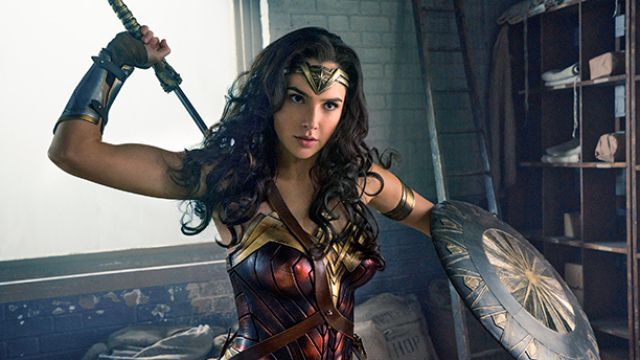
Wonder Woman has been both critically acclaimed and been smashing box office records. This success means so much more than it would for just any other superhero film, or any big budget release for that matter. As the first female superhero film (of this modern era), and the highest grossing film by a female director, it could signal a change in attitudes towards women in front of and behind the camera. It is also important for the audience, especially young girls, to have a strong female heroine up on the screen – the power of which is inestimable.
The fact that it took so long to even get to the point where, in a market seemingly over-saturated by superhero films, DC was willing to finally release just one starring a woman, suggests that studios see female-driven action films as a gamble, something audiences don’t want to see. They seem to think men and women (who generally make up equal numbers in the cinema-going figures) are only interested in watching male-oriented action films, and thus only produce such. The fact that Wonder Woman has grossed so much and had such an impact in the pop culture zeitgeist will hopefully serve to put that absurd assumption to rest. It shows people do want to see female action and superhero films, and hopefully will be taken as proof of that, not seen as an outlier. This could be part of a change in the tides; we could see a lot more female-starring action films to come (and thus better representation of women on screen).
Patty Jenkins’ success as the film’s director also proves, in a similar sense, that women should be seen as an asset to film, not a liability. There is a huge disparity between the number of men and women directing films – last year only 7% of the directors of the 250 highest-grossing films were women, suggesting not many are being allowed to take up position behind the camera (particularly on big-budget studio fare). Jenkins’ record-breaking numbers – she holds the record for the biggest US opening weekend on a film directed by a woman, and the film has had the lowest drop in second weekend intake since The Dark Knight – should act as evidence that women are just as capable at the helm of big-budget pictures, and that their gender should not be seen as an automatic weakness. This may prompt more studios to hire (or at least look at) the female directors out there when selecting their teams, and hopefully start to close the absurd gap shown by the statistics. A male gaze is not necessary to make a successful film.
Finally, perhaps one of the most important consequences of Wonder Woman’s success (and one that will only be further helped if the film does help to force a change in the industry) is the impact of the character on the audience. Showing a strong female figure up on the screen, kicking ass just as well as the boys, can have an invaluable impact on those watching it, especially young children. Girls can see a role model up there, someone to play as in the playground or dress up as at Halloween, and a figure to empower them. Boys too can see that girls are not just someone to be saved, but are powerful and have agency in their own right, but she is also a hero for everyone, so expect to see girls and boys sporting the iconic W at any dress-up event. Even as a young woman, the elation I felt watching Wonder Woman on screen was far more than I had ever expected. You constantly hear statements such as ‘every boy wants to be James Bond’, for example, or any other action or super-hero, but you rarely hear the same for young girls beyond generic princesses. Not every girl wants to be a princess, or wants to be something else too. Wonder Woman gives them that character to be inspired by and proud of. I never fully realised what we were missing out on without someone to aspire to in this sense until I was watching the film and felt a great sense of power from what was happening on screen. Even just check out Patty Jenkins’ tweet with a list of things that have happened at a school in the first week of Wonder Woman being released and you’ll come to see how impactful characters and stories like this can be.
The ripples of Wonder Woman’s success (should they be as powerful as they seem) will hopefully spread through both the industry and its audiences, and may be a real catalyst for change (I hope). It is important that it triumphed, as had it been a failure, potentially the blame would have been put on the lack of Y-chromosomes involved in the production. Surely, for the people with these attitudes, the reason that this film is the DCEU’s first real hit should be attributed to the fact it is female driven? Sadly, hypocrisy is rife and so is discrimination, but here’s to hoping that this could be part of the big push that helps make some real progress.


Pingback: 2017: Progress in the Industry | REEL WREN